Services
Flood Risk Assessment
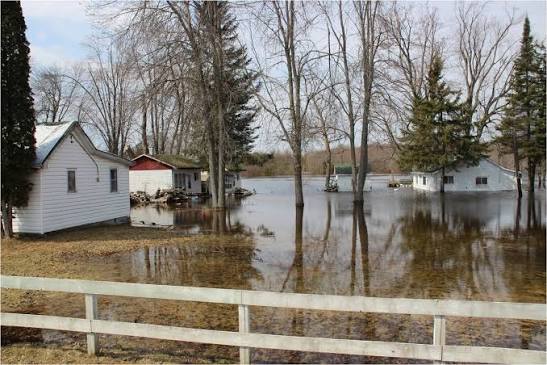
Flood Risk Assessment evaluates a site’s exposure to flooding before an event, so protection is planned rather than improvised. Defender reviews flood mapping and history, drainage and topography, proximity to rivers, lakes, and coastlines, and the specific vulnerable points of a property or facility, then recommends the level and type of protection required and the Defender systems suited to the site.
What’s Included
- Review of flood mapping, history, and the site’s flood pathways (riverine, rainfall/pluvial, snowmelt, ice-jam, and coastal storm surge)
- Drainage, grading, and topography analysis
- Identification of vulnerable openings, access points, and low spots
- Recommended protection strategy matched to Defender products
- A documented basis for the site’s flood plan
Flooding is the most common and most costly natural disaster in both Canada and the United States, and the risk is rising with more intense rainfall, snowmelt, ice jams, and storm surge.
Flood Survey
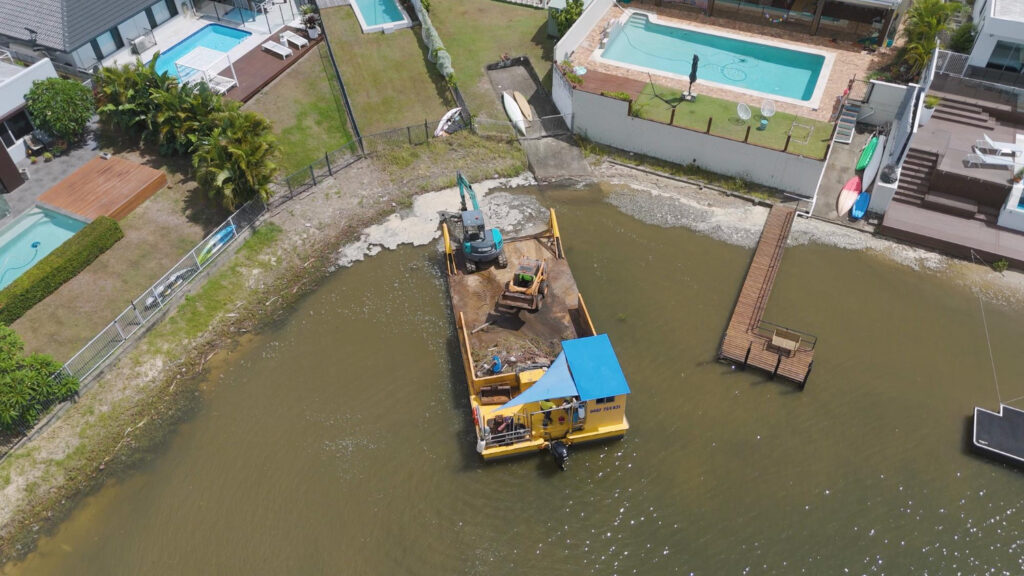
A Flood Survey is the on-site measurement and mapping that turns a protection strategy into a deployable plan. Defender measures the perimeter, openings, access points, elevations, and ground conditions to define exact barrier lines, heights, quantities, and configuration for the site.
What’s Included
- Measurement of perimeter, openings, and access points
- Elevation, grade, and ground-condition survey
- Defined deployment lines, including corners, slopes, and height transitions
- Equipment schedule — systems, quantities, and configuration
- A documented, repeatable deployment plan
An accurate survey is what makes rapid deployment possible once a warning is issued: crews know precisely where each section goes, how much equipment is required, and how to handle corners, slopes, and thresholds.
Spill Response
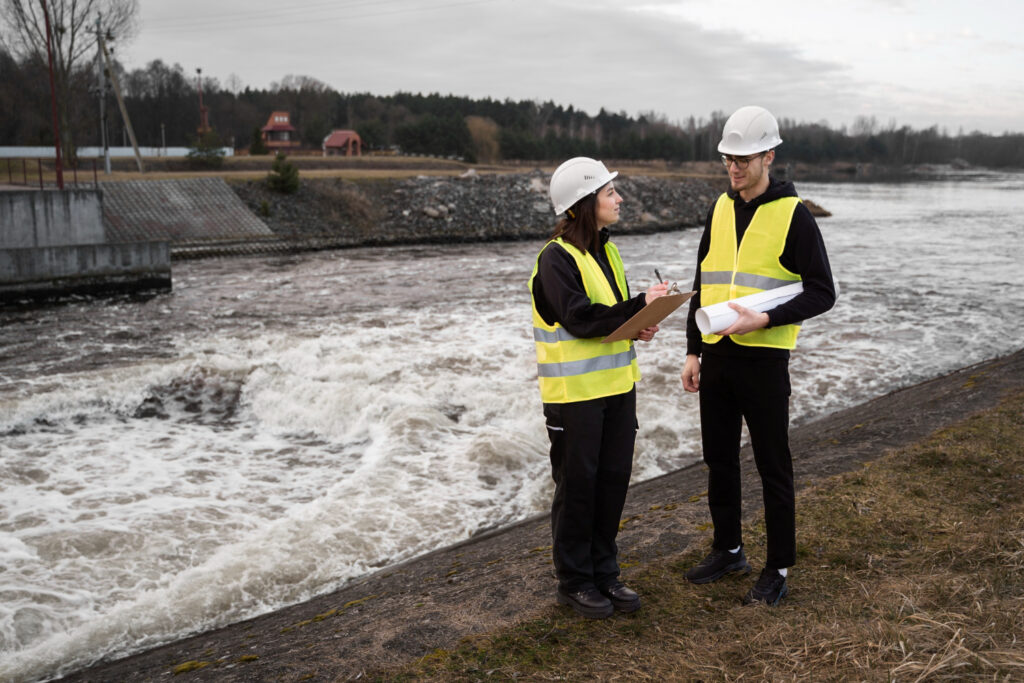
Spill Response is the service of getting spill-containment products to a release fast. Defender supplies and dispatches pre-staged, container-ready response kits — assembled from its own product family — so a crew can contain, dam, recover, and store a release before a vac truck reaches site. Defender provides the equipment and the kits; it does not perform the cleanup itself.
Kits are built to the site and offered at tiered levels of readiness (from a minimal storage-and-recovery kit up to a heavy wetlands configuration), each drawing on the same components: Rapid H2O for perimeter containment and recovered-fluid storage, ECO-Dam to dam a ditch or channel and divert clean upstream water around the impacted zone, boom for on-water capture, plus pumps and seacans. A crew trained on one kit can run any of them. The Kelly Lake Response Kits proposal is an example of this kit-based approach.
What’s Included
- Pre-staged, container-ready spill response kits — sold or rented
- Products sized to the exposure: containment, damming and diversion, on-water boom, pumping, and storage
- Kits built and re-specified to the site (taller dam, longer barrier or boom runs, extra pumps)
- Rapid dispatch so containment is on site before a vac truck arrives
- Equipment supply and rental only — cleanup and remediation are carried out by the operator or their contractor
Fast, on-site containment matters because releases are tightly regulated across North America. In the U.S., the EPA’s Spill Prevention, Control, and Countermeasure (SPCC) and Facility Response Plan rules apply, and any oil that reaches water and creates a sheen is reportable to the National Response Center. In Canada, the Canadian Environmental Protection Act’s Environmental Emergency (E2) Regulations and provincial regulators — such as the Alberta Energy Regulator, with its 24-hour line and reporting thresholds — require immediate notification and timely cleanup. Having the right containment products staged and dispatched quickly helps operators hold a release and meet those timelines.
Environmental Remediation
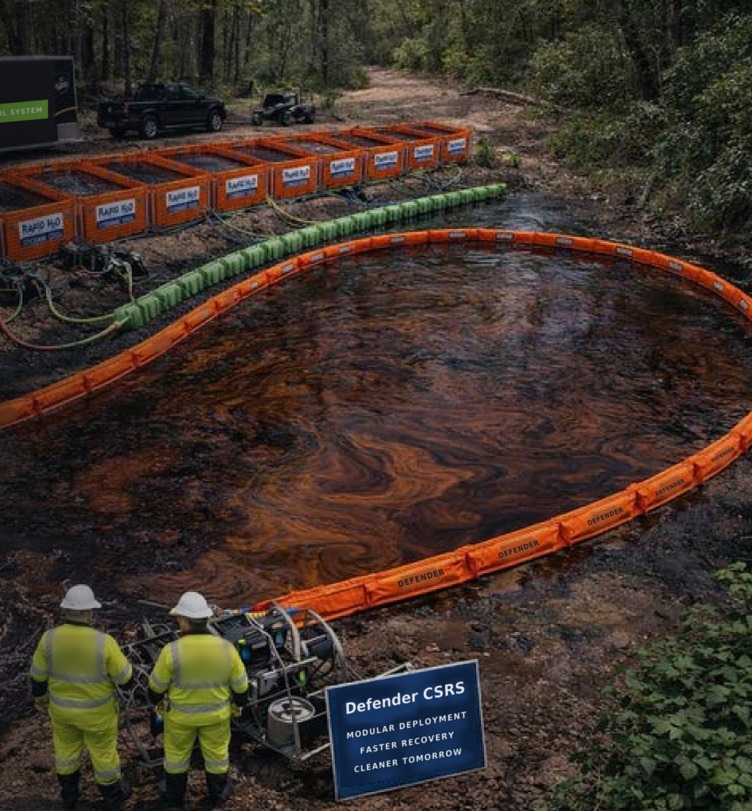
For remediation, Defender’s role is to supply the products that assist a cleanup — not to perform the remediation itself. Defender provides the containment, storage, diversion, and site-protection equipment a remediation crew needs to work: perimeter berms to isolate the area, storage for recovered fluids, damming and diversion to keep clean water out of the impacted zone, and erosion and runoff control during the works.
The remediation itself — soil and water treatment, disposal, and regulatory closure — is carried out by the operator or their environmental contractor. Defender equips that work with reusable, redeployable products rather than single-use consumables.
What’s Included
- Supply of containment and isolation products for the work area
- Storage for recovered fluids and materials
- Damming and diversion to separate clean water from the impacted zone
- Erosion and runoff control products during the works
- Sales and rentals of the above — the remediation itself is performed by others
Remediation is measured against the cleanup standards of the jurisdiction — for example, tiered provincial soil and groundwater guidelines in Canada (such as Alberta’s), and EPA and state cleanup programs in the U.S.
Erosion Control
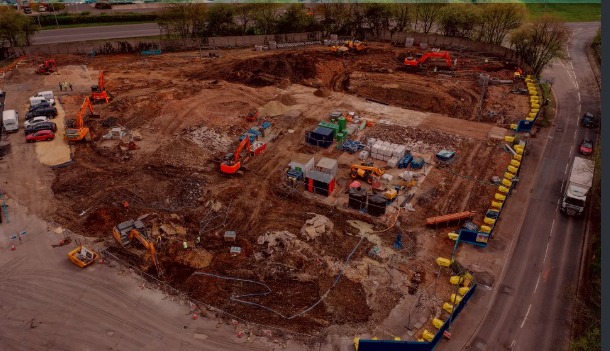
Erosion can weaken land, damage infrastructure, and create long-term environmental challenges. Our erosion control solutions are designed to reduce soil loss, stabilise vulnerable areas, and provide effective protection against water and weather-related erosion.
We take a practical, site-specific approach to erosion control, helping identify vulnerable areas and implement reliable solutions that support long-term stability while minimising further environmental impact.
What’s Included
- Site Assessment & Erosion Risk Identification
- Ground Stabilisation & Protective Measures
- Water Flow & Runoff Management
- Infrastructure & Slope Protection Solutions
- Long-Term Erosion Prevention & Monitoring
From initial assessment through to implementation, we help develop effective erosion control strategies suited to the conditions and requirements of each site. Our solutions are focused on protecting vulnerable ground, maintaining stability, and reducing the risk of future erosion.